Sustaining Dance Careers
Foundations for Sustainable Dance Careers: Budapest Circus Arts and Contemporary Dance College Concludes Its International „Sustaining Dance” Program.
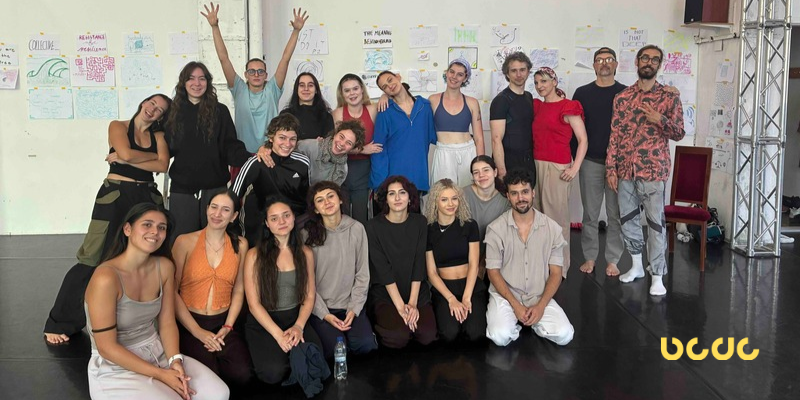
Through a seven-day intensive physical training between 6th and 13th September, 2026 in Budapest, combined with virtual learning modules, participants in the Erasmus+ Blended Intensive Program (BIP) explored questions of sustainability and sustainable practice in the performing arts. The program introduced a range of tools for developing body awareness, stress regulation, and creative practice, inviting participants to reflect on how these approaches can support a sustainable and balanced artistic practice.
The Budapest Circus Arts and Contemporary Dance College (BCDC) has successfully hosted the international Blended Intensive Program (BIP) titled „Sustaining Dance: How to build a well-balanced career?”. Supported by the Erasmus+ initiative, this hybrid course was designed to equip aspiring dance artists with practical tools to navigate the physical, mental, and creative demands of the performing arts field, promoting long-term resilience and professional fulfillment. The program combined seven days of physical mobility training in Budapest with two virtual online sessions. An international group of graduating dance students and pre-professional artists engaged in intensive studio sessions and seminars guided by three distinguished educators and experts:
Coaching Mindset and Postmodern Ballet (István Simon): Integrating coaching principles, such as goal orientation, active listening, and positive thinking, into ballet education encouraged dancers to let go of preconceived notions of perfection and develop a more open and self-directed approach to learning. Through postmodern ballet, dancers explored movement mechanics and alternative approaches to technique, focusing on organic fluidity, weight shifting, and the use of momentum and gravity.
Body and Health Awareness (Boglárka Simon-Hatala): Combining somatic education, experiential anatomy, and spatial awareness practices, this pillar explored evidence-based approaches to injury prevention, alignment, and stress management. Participants also examined interpersonal dynamics, including proxemics and the important distinction between empathy and sympathy, developing tools for setting healthy boundaries and supporting emotional well-being in their professional practice.
Creative Practice and Improvisation (“Swimming in the Creative Pool” by Imre Vass): Through contemplative methodologies and improvisational tasks, this module guided dancers in expanding their movement vocabulary, cultivating presence, and exploring different methodologies for shaping and developing artistic work. Physical research was complemented by drawing, writing, and group discussions, enabling participants to process inner experiences, articulate their reflections, and document personal insights.
Transformative Student Impact
Participant reflections underscored a fundamental shift from viewing the dancer’s body as a mere mechanical execution instrument to recognizing it as a relational, communicative subject. Students highlighted key practical breakthroughs, including spatial grounding to manage performance pressure, nonverbal connection exercises that fostered group trust, and the creation of performance „alter egos” to navigate stage fright with authenticity.
„Rather than viewing success solely through performance achievements, I now understand that long-term artistic fulfillment relies on creating a healthy, sustainable foundation. Distinguishing empathy from sympathy, setting boundaries to safeguard energy, and maintaining physical longevity through somatic awareness directly reflect the core mission of Sustaining Dance”.
By fostering a safe, collaborative environment where experimentation is celebrated, BCDC continues its commitment to advancing research-based, health-conscious education for the international dance community.